
🗓️
Two cladding panels can look nearly identical in a showroom yet deliver completely different results on site. We explain the hidden quality differences in artificial stone and brick cladding that architects, interior designers, and builders must evaluate before specifying — and how to always choose right.
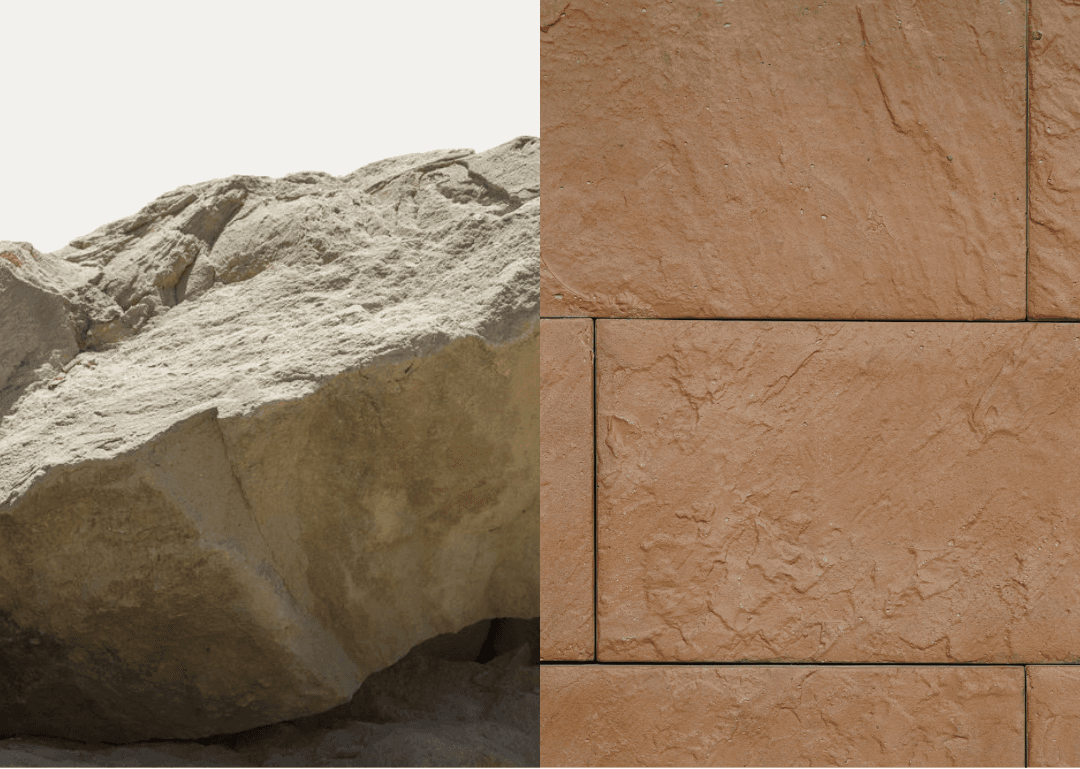
Walk into any tile dealership or cladding showroom in India today and you will find rows of stone and brick panels that look remarkably similar. Same warm earth tones, comparable surface relief, similar sizing. Two panels placed side by side could easily be mistaken for the same product. Yet once those panels leave the showroom and reach a real construction site — a residential façade in Pune, a commercial lobby in Mumbai, an exterior elevation in Nashik baking under the summer sun — their performance can diverge dramatically. One stays put, ages gracefully, and requires almost no upkeep. The other fades, absorbs water, cracks under thermal movement, or falls away from the wall within a few seasons.
For interior designers, architects, builders, and premium cladding dealers, this divergence is not just a quality story. It is a liability story. A client-relationship story. And ultimately, a reputation story.
At Vertical Stones and Bricks, we have spent over a decade working closely with architects and builders across India, and we have seen this gap play out on real projects too many times. That is why we want to break down the precise, often invisible factors that separate high-performing artificial stone and brick cladding from products that merely look the part — so you can make better sourcing decisions, protect your project outcomes, and specify with genuine confidence.
The "Same Look" Illusion: Why Showroom Comparisons Are Not Enough
The artificial stone and brick cladding category has grown rapidly in India over the last decade. As demand from residential developers, commercial builders, and design-conscious homeowners has surged, so has the number of products entering the market. Many of them are visually indistinguishable at first glance, particularly when viewed in the flat, controlled lighting of a showroom.
This is the first and most dangerous trap we see professionals fall into: evaluating cladding panels purely on aesthetics at the point of purchase.
Visual appeal matters, certainly. But a panel's surface character — the depth of its relief, the irregularity of its edges, the warmth of its colour palette — is only the beginning of what determines whether it will perform well over five, ten, or twenty years. The showroom cannot simulate monsoon-driven moisture, the thermal cycling of an exposed façade, the alkalinity of fresh mortar, or the ultraviolet intensity of an Indian summer afternoon. Only a product built with real attention to site performance will survive those conditions gracefully.
The design professionals and builders who consistently deliver excellent long-term results are those who have learned to look beyond the surface. We built our entire range around that same discipline.
Weight and Load: The Structural Consideration We Take Seriously
One of the most consequential differences between cladding panels that look nearly identical is their weight per square metre. This is a factor that rarely comes up in casual product conversations but matters enormously in practice — and it is one we addressed directly when developing our range.
Heavier cladding adds dead load to walls and structural elements. On high-rise buildings, this load accumulates rapidly across hundreds of square metres of façade. On older structures being retrofitted, it can stress existing wall ties and fixings beyond their rated capacity. On interior feature walls — a popular application in premium residential and hospitality projects — excess weight limits design freedom and increases installation complexity.
Lightweight cladding, by contrast, opens up the entire building envelope. It can be used on balcony faces, partition walls, and retrofit applications without structural reinforcement. It installs faster, reduces labour costs, and eliminates the engineering consultations that heavier alternatives demand.
At Vertical Stones and Bricks, we have made lightweight construction a core design principle across our entire stone cladding and brick cladding range. This means our panels are suited for modern vertical construction — including high-rises and commercial façades — where structural efficiency is non-negotiable.
When you are comparing two visually similar cladding products, always request their weight per square metre. The difference can be significant even between products that look identical in the showroom.
Water Repellence: The Factor That Separates Long-Term Performers from Short-Term Pretenders
India's climate presents a severe test for any exterior cladding. The monsoon season brings sustained moisture exposure — not just rain, but humidity, condensation, and wind-driven water — that works its way into porous surfaces over time. In coastal regions like Mumbai, this challenge is compounded by salt-laden air. In colder inland zones, retained moisture can expand and contract with temperature changes, gradually degrading any surface that is not genuinely water-resistant.
This is where we have seen two visually similar panels diverge most dramatically on site.
A cladding panel that lacks water repellence will absorb moisture into its body. This leads to a cascade of problems that our clients have described to us when they have previously used inferior products:
Efflorescence — the white salt deposits that bleed through and disfigure the surface
Colour fade — UV and moisture together break down pigment, particularly in cheaper products
Spalling and surface damage — moisture expansion cycles cause micro-fractures that eventually become visible chips and cracks
Adhesion failure — moisture trapped behind poorly sealed panels weakens mortar bonds over time
Our products are designed to be genuinely weather-ready and water-repellent — a standard we hold because we know what Indian climate conditions demand. Water beads off our panel surfaces rather than penetrating. The body of the panel stays stable. The colour remains rich. The bond to the wall stays intact season after season.
When shortlisting cladding options for exterior applications, always request specific confirmation of water repellence and ask whether it is surface-applied or inherent to the panel. Surface-applied treatments can wear off. Ours does not depend on a surface coat alone.
Surface Finish Quality: Why Our Factory-Finished Panels Outperform Site-Finished Alternatives
The quality and consistency of a panel's surface finish is another domain where visually similar products can diverge significantly. This matters for three reasons: aesthetics, maintenance, and durability — and it is something we invested deeply in getting right.
Factory Finishing vs. Site Treatment
Some cladding products arrive on site requiring sealing, painting, or protective coating before or after installation. This introduces variability — the quality of the finish depends on the skill of the applicator, the conditions on that particular day, and the products used. Uneven application leads to inconsistent sheen, patchy colour, or areas of inadequate protection.
Our factory-finished panels eliminate this variability entirely. We apply surface treatment under controlled conditions to a consistent standard across every panel in a batch. What you see in our showroom is exactly what you get on the wall, performing to a known standard from day one.
For premium residential and commercial projects where surface uniformity is part of the design language, this is a critical advantage that we hear our architect and designer partners mention repeatedly.
Colour Depth and Authenticity of Detailing
Factory finishing also allows us to build genuine depth into the surface detailing of every panel — the layered tonal variation, shadow lines, and relief that make our artificial stone and brick cladding look convincingly authentic rather than flat and obviously manufactured. This is a craft skill we take seriously, and it is what separates our collections from commodity alternatives.
Our range — including collections such as Smoky Ledge, Sage Crest, Ocherfield, Ashflame Basalt, Cinnamon Fired, and Rustico Terrano — reflects a design philosophy rooted in Indian masonry traditions and European architectural references. We use layered colouring in each collection to replicate the natural variation found in real stone and fired brick, something that simply cannot be achieved with a single surface coat applied on site.
Dimensional Consistency and Natural Stone Proportions: How We Design for Authenticity
A detail that experienced specifiers learn to check — and that newcomers often overlook — is dimensional consistency across a batch of panels. It is something we thought about carefully when designing our product range.
Natural stone and brick have inherent dimensional variation. This variation is part of what gives genuine masonry its character — the slightly different widths, the irregular joint lines, the organic rhythm of a well-laid stone wall. Our artificial cladding mimics this quality through deliberate variation in panel sizing, not through sloppy manufacturing tolerances.
The difference between these two types of variation is critical. Deliberate sizing variation, built into the design of our panel range, creates a natural-looking installation. Inconsistent manufacturing tolerances create installation headaches: panels that do not align properly, joint lines that wander, and a finished wall that looks uneven rather than organic.
We maintain a design standard where each of our stone panels holds a consistent height while widths vary deliberately to replicate the way natural stone formations are laid. This produces a wall that reads as authentic without creating the installation difficulties that inconsistent product causes on site.
When evaluating any cladding product — ours or a competitor's — we recommend installing a small test arrangement on a flat surface before committing to a full specification. The quality becomes obvious in this exercise, and any problems that would compound across fifty or five hundred square metres reveal themselves quickly.
Installation Efficiency: How Our Product Design Helps Reduce Total Project Cost
Project cost for cladding is not just the material cost per square metre. It includes labour, adhesive consumption, wastage, correction work, and time. A product that installs slowly, wastes more material through breakage, or requires multiple coats of site-applied treatment adds cost at every stage — and we designed our range specifically to avoid all of those problems.
Our panels have consistent edges that allow clean joints. They are light enough to be handled quickly by a small installation team. They bond well to standard adhesives without specialist tools or unusual installation sequences. And because our factory finish eliminates the need for site-applied treatment, the installation process is cleaner and faster from start to finish.
For builders managing large residential developments or commercial projects with tight programme schedules, this is not a minor benefit — it is a material project management advantage. We regularly hear from our builder clients that faster installation and a cleaner construction process are among the most valued practical benefits of working with us, alongside the aesthetic results.
For anyone evaluating competing cladding options, we would encourage you to model total installed cost rather than just material cost. The saving on labour and programme time from a well-designed product often outweighs a higher panel price many times over.
Low Maintenance Performance: The True Long-Term Value of Our Cladding
Perhaps the most significant long-term differentiator between high-quality and low-quality cladding is maintenance demand. This is a cost that falls on the building owner — but it directly affects your client satisfaction, referrals, and professional reputation. We designed our products so that our clients never have to explain a maintenance problem to theirs.
Our cladding is designed for genuinely low long-term upkeep. Specifically, this means:
Colour stability over years of UV exposure, without fading to a washed-out version of the original
Surface resistance to organic growth, staining, and surface deposits without chemical intervention
Bond integrity that does not deteriorate with seasonal moisture and temperature cycles
Surface relief that does not erode or flatten over time, preserving the visual character of the installation
These standards are not achieved through maintenance instructions given to the owner. They are built into the product at the design and production stage. The maintenance behaviour of a panel is decided long before it ever reaches a site.
When sourcing cladding for premium projects, we would suggest asking any supplier for installed project references that are three or more years old, and visiting those sites if possible. The condition of a three-year-old installation in Indian climate conditions tells you everything that a showroom sample cannot. We are happy to share ours — take a look at our completed project gallery for a sense of how our products hold up in real applications.
Choosing a Cladding Partner, Not Just a Product: What We Believe You Deserve
For interior designers, architects, and builders who specify cladding regularly, the supplier relationship matters as much as the product itself. We have always believed that our job is not just to manufacture panels — it is to support your project from specification to successful installation.
When evaluating any cladding supplier, here is what we think you should look for:
Design heritage and inspiration depth — does the product range reflect genuine understanding of architectural character, or is it generic and undifferentiated?
Product range breadth — can they meet the varied requirements of residential, commercial, interior, and exterior applications from a single coherent range?
Technical support availability — will they provide guidance on adhesive selection, joint treatment, corner detailing, and application method for specific substrates?
Installed project references — can they show you real completed projects, not just showroom samples?
Consistency across batches — can they supply consistent colour and finish across the full quantity required for a large project?
Commitment to responsible sourcing — does their product philosophy reflect awareness of environmental responsibility?
We built Vertical Stones and Bricks around close collaboration with architects and interior designers from the very beginning — that is what shaped our product range, our finishing standards, and our approach to service. We do not see ourselves as a commodity supplier. We see ourselves as a long-term partner for the professionals who trust us with their projects.
Our Environmental Commitment: Why We Believe Artificial Cladding Is the Responsible Choice
A dimension of cladding specification that is gaining increasing importance — particularly for architects and developers aligned with green building principles — is environmental responsibility. It is a principle that sits at the heart of why we exist as a company.
Natural stone quarrying is resource-intensive. It disturbs ecosystems, consumes water, and generates significant transportation emissions given that much premium stone in India travels long distances from quarry to site. Our products are designed to address this directly.
By choosing our artificial stone and brick cladding, your project reduces demand for quarried natural stone. Our lightweight panels eliminate the structural reinforcement requirements that heavier alternatives impose, reducing the concrete and steel consumed in construction. And our products deliver a long service life that eliminates the replacement cycles associated with lower-quality alternatives.
We articulate this philosophy simply: for centuries, buildings borrowed beauty from Earth — but every real stone and soil taken leaves nature a little weaker. Our range exists to give buildings the character and warmth of traditional Indian masonry without the ecological cost of natural stone extraction. It is a choice we are proud of, and one that increasingly resonates with our clients and their clients too.
Conclusion: The Standard You Hold Determines the Outcomes You Deliver
Two stone or brick cladding panels can look identical in a showroom and perform worlds apart on a building. The gap between them is built into every decision made in their design and production — weight, water repellence, surface finish quality, dimensional consistency, and the long-term maintenance behaviour that only time reveals.
We have spent over a decade making those decisions carefully, because we know that the professionals who specify and supply our cladding are putting their reputation behind it. When we get it right, your project ages beautifully. Your client is delighted. And the building stands as evidence of a good decision.
The right question to ask of any cladding product — including ours — is not "does it look right?" but "will it perform right — in the rain, in the heat, over the years, and in my client's memory?"
We are confident in what our answer looks like. We would love to show you.
Ready to Specify with Confidence? Let's Talk.
If you are an architect, interior designer, builder, or dealer looking for cladding that delivers on both aesthetics and long-term site performance, we invite you to explore our full range at Vertical Stones and Bricks.
Browse our complete stone cladding range — including Smoky Ledge, Sage Crest, Ocherfield, Ashflame Basalt, Oasis Basalto, and Stone Haze.
Explore our full brick cladding collection — featuring Cinnamon Fired, Burnt Mocha, Desert Buff, Rustico Terrano, Ridgeburn, and more.
View our completed project photography to see how our products perform across real applications.
Contact our team for product guidance, application advice, and specification support tailored to your project.
The right cladding choice is not just a surface decision — it is a project performance decision. We are here to help you make it well.