
🗓️
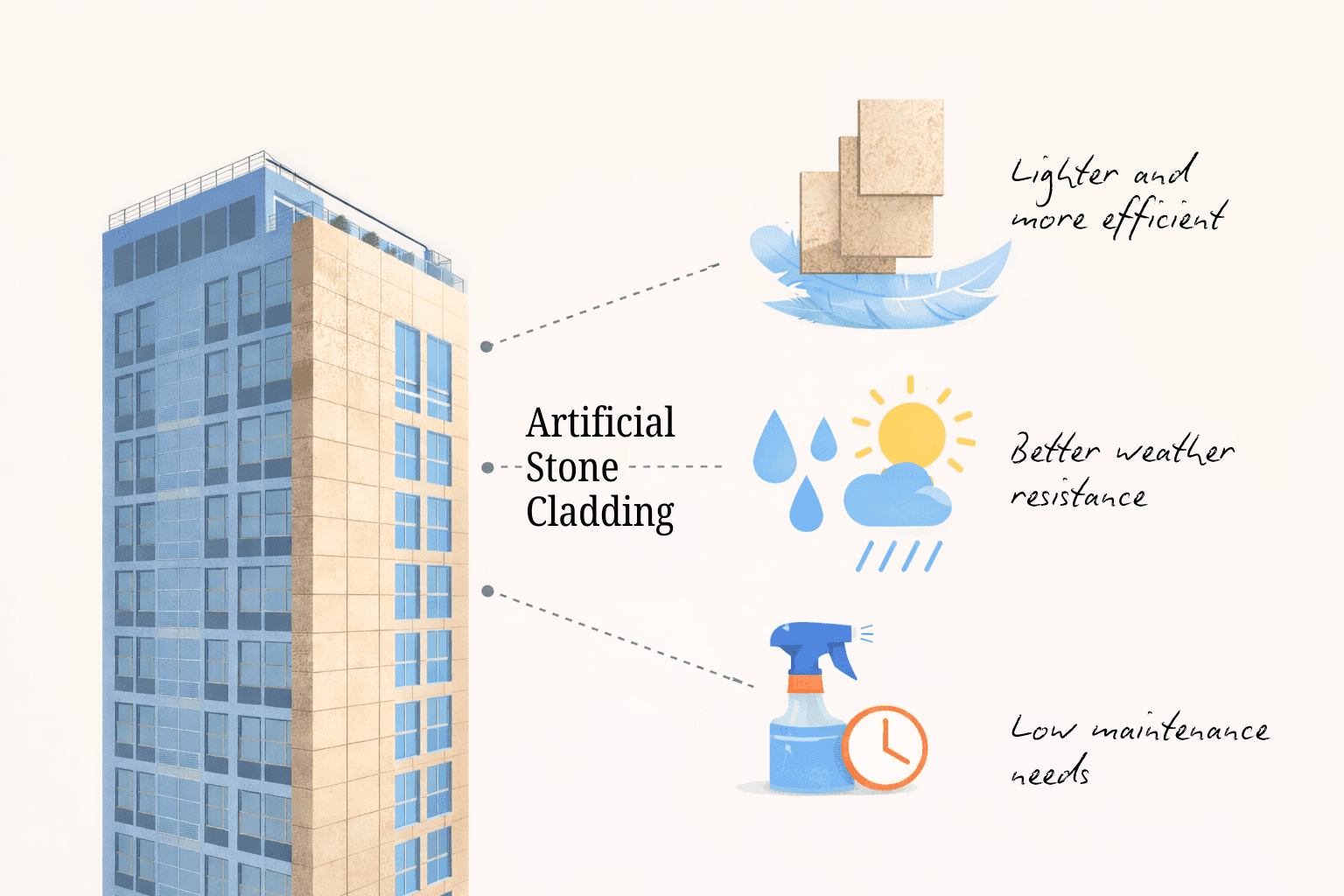
Artificial stone cladding has become a preferred choice for high-rise buildings due to its lightweight structure, structural reliability, and consistent detailing. Unlike natural stone, it reduces load on the building, improves installation efficiency, and requires minimal long-term maintenance. Its engineered performance ensures better resistance to weather, environmental stress, and facade wear over time.
For developers and architects working on tall buildings, artificial stone cladding delivers a practical balance of durability, cost control, and modern design consistency.
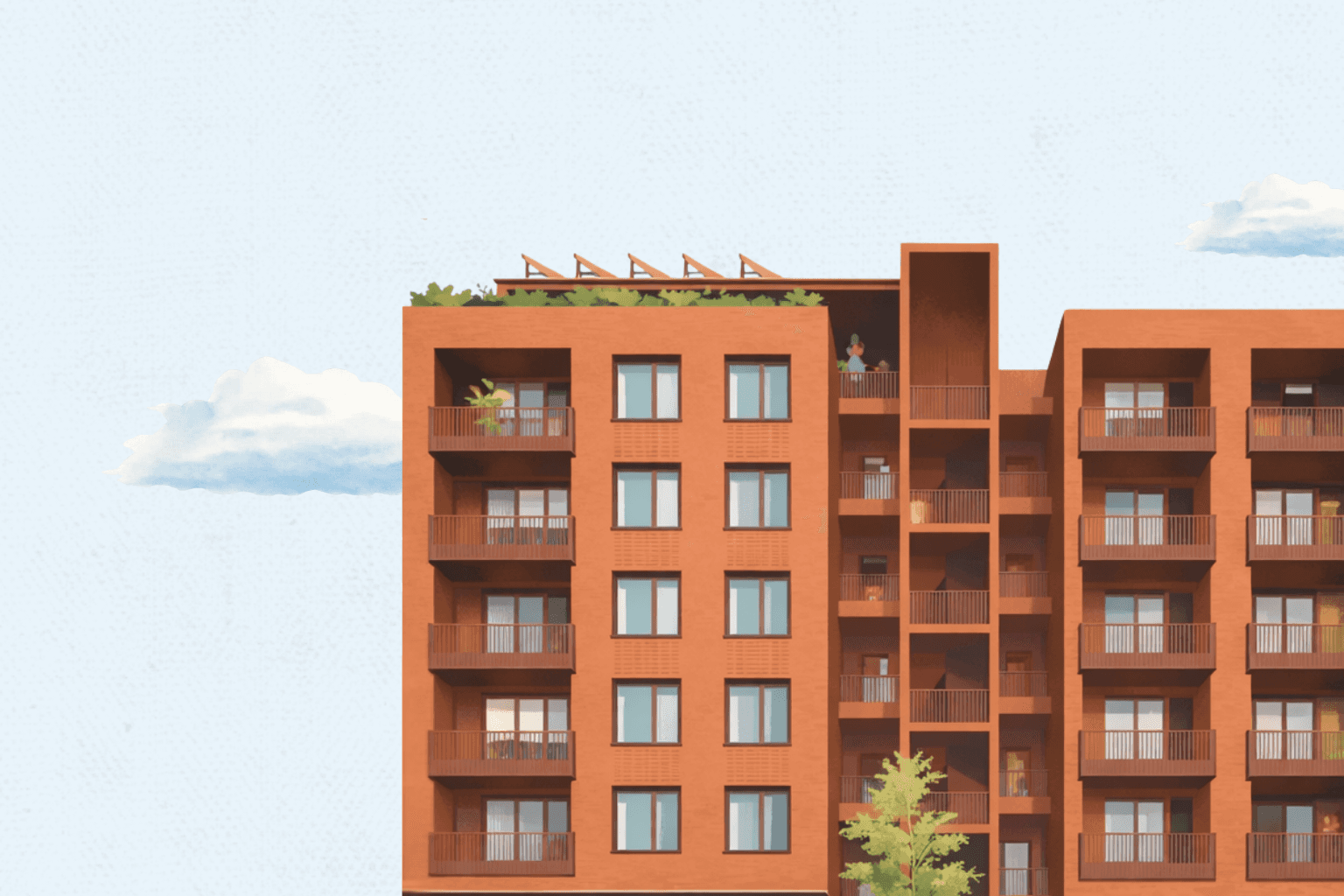
High-rise buildings define modern cities. They must look impressive, perform in extreme conditions, and remain safe for decades. Every material used on a tall structure must meet high standards of durability, reliability, and efficiency. One material that fits these demands exceptionally well is artificial stone cladding.
In recent years, architects and developers have increasingly chosen artificial stone cladding for high-rise projects. The reasons go beyond aesthetics. From reduced structural load to long-term cost savings, artificial stone cladding solves many practical challenges that tall buildings face.
This article explains why artificial stone cladding is ideal for high-rise buildings and how it performs in real-world conditions.
Understanding Artificial Stone Cladding
Artificial stone cladding is an engineered exterior surface solution designed to replicate the refined look of stone while offering superior control over strength, detailing, and performance.
Unlike natural stone, which is extracted from quarries and varies from slab to slab, artificial stone cladding is produced under controlled factory conditions. This ensures uniformity, consistent strength, and precise detailing across every panel.
In high-rise construction, where safety, structural efficiency, and visual consistency matter more than natural variation, this level of control becomes a major advantage.
The Unique Demands of High-Rise Buildings
Tall buildings face constant exposure to wind pressure, rain, pollution, temperature shifts, and UV radiation. Exterior materials must withstand these forces without cracking, fading, or deteriorating over time.
In addition, high-rise structures experience movement due to wind and thermal expansion. Cladding materials must be stable enough to handle these stresses while remaining secure at height.
Maintenance is another major concern. Repairs and cleaning at high levels are expensive and logistically challenging. This makes low-maintenance materials highly desirable.
Artificial stone cladding is engineered specifically to address these challenges.
Reduced Weight, Greater Structural Efficiency
One of the strongest advantages of artificial stone cladding in high-rise buildings is its lighter weight compared to natural stone.
Natural stone slabs are heavy and add significant load to the structure. This increases pressure on foundations and support systems, raising overall construction costs.
Artificial stone cladding delivers the appearance of natural stone while significantly reducing structural load. This lighter weight improves installation efficiency, enhances safety at height, and reduces transportation and handling complexity.
In high-rise projects, where every kilogram impacts structural planning, this advantage is critical.
Superior Stability and Safety at Height
Safety is non-negotiable in tall buildings. Natural stone can develop cracks over time due to internal inconsistencies or environmental exposure. In high-rise applications, this increases the risk of loosening or surface damage.
Artificial stone cladding is manufactured for uniform density and structural consistency. This reduces weak spots and improves long-term stability. When installed using modern fixing systems, it offers reliable adhesion and secure performance.
For residential towers, commercial offices, and mixed-use developments, this reliability makes artificial stone cladding a safer and more dependable facade solution.
Strong Weather Resistance
High-rise facades are fully exposed to environmental stress. Continuous wind, rain, and sun can damage many exterior materials over time.
Artificial stone cladding is designed to resist moisture absorption, surface cracking, and color fading. Its engineered structure helps prevent water penetration and surface deterioration, making it suitable for coastal regions, humid climates, and polluted urban environments.
This long-term resilience reduces repair frequency and preserves the building’s appearance for years.
Consistent Appearance Across Large Surfaces
High-rise buildings often have vast facade areas. Achieving uniform visual appeal across such scale is difficult with natural stone due to variation in color and detailing.
Artificial stone cladding provides controlled consistency from top to bottom. Every panel maintains the same finish and detailing, ensuring a cohesive and modern look across the entire building envelope.
For contemporary architecture that prioritizes clean lines and symmetry, this consistency is a significant design advantage.
Lower Maintenance and Long-Term Savings
Maintaining the exterior of a high-rise building is expensive and complex. Natural stone often requires periodic sealing, inspections, and stain management.
Artificial stone cladding demands far less upkeep. Basic cleaning is typically sufficient to maintain its appearance. Because it resists staining and environmental wear more effectively, it reduces long-term maintenance costs.
Over the lifespan of a tall building, these savings can be substantial.
Better Cost Control for Large Projects
In high-rise developments, small cost differences can multiply across thousands of square meters. Artificial stone cladding offers better cost predictability due to standardized production and reduced installation wastage.
Its lighter weight supports faster installation, reduces labor complexity, and minimizes project delays. Over time, lower maintenance requirements further improve financial efficiency.
For developers focused on timelines and budget control, artificial stone cladding offers a practical advantage.
A Sustainable Approach for Modern Cities
As cities grow vertically, sustainable construction becomes increasingly important. Artificial stone cladding reduces dependence on quarry extraction and allows for more controlled production processes.
Because it offers durability and low maintenance, it reduces material replacement over time. This supports long-term resource efficiency and aligns with responsible urban development goals.
Where Artificial Stone Cladding Works Best
Artificial stone cladding performs especially well in residential towers, commercial office buildings, hotels, and mixed-use high-rise developments. It is suitable for full facades, podium levels, feature elevations, and entrance areas.
Its engineered precision allows designers to achieve a refined stone appearance without the structural and maintenance limitations of natural materials.
Final Thoughts
High-rise buildings demand materials that combine strength, safety, efficiency, and design consistency. Artificial stone cladding meets these expectations with a balanced mix of durability, lightweight performance, and long-term cost control.
While natural stone may still suit selective applications, artificial stone cladding offers a more reliable and performance-driven solution for tall modern structures.
If you are planning a high-rise project, consulting experienced architects or interior designers can help you choose the right cladding solution. The right material choice today will define how your building performs and stands on the skyline for decades.