
🗓️
Pre-polished stone cladding is transforming how modern facades are installed by shifting finishing work from the construction site to the factory. Because panels arrive fully polished and quality-checked, installation becomes faster, cleaner, and far more predictable. This reduces on-site labor requirements, minimizes rework, and shortens project timelines.
For developers, architects, and contractors, pre-polished stone cladding offers more than aesthetic appeal—it provides stronger cost control, better finish consistency, and long-term maintenance advantages for residential, commercial, and high-rise buildings.
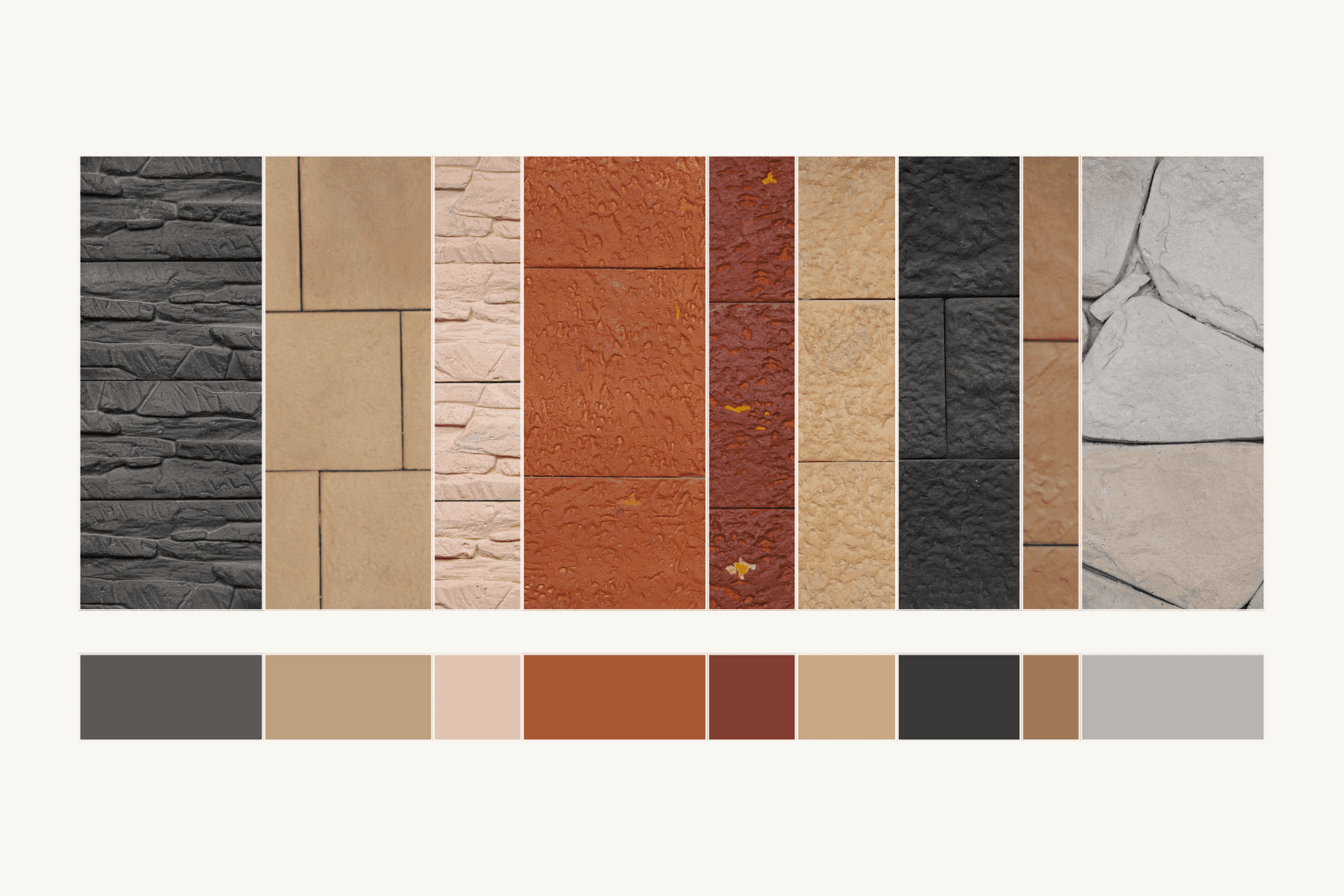
When people evaluate stone cladding for a construction project, the conversation almost always begins with appearance — surface detailing, finish quality, and overall aesthetic appeal. Cost enters the discussion too, but typically only as a material rate per square foot. What most developers, contractors, and even experienced architects tend to overlook is how much money is actually spent after the stone reaches the construction site. That is precisely where pre-polished stone cladding quietly and significantly changes the financial equation. While it may appear similar to conventional stone at first glance, pre-polished stone cladding carries a substantial hidden cost advantage that becomes visible during installation, project timelines, and long-term building maintenance.
What Pre-Polished Stone Cladding Actually Means
Pre-polished stone cladding refers to stone or engineered stone panels that are fully finished at the manufacturing facility before they are transported to the construction site. The surface polishing, edge finishing, dimensional calibration, and quality inspection are all completed under controlled factory conditions — not on a construction floor exposed to dust, weather, and variable labor skill.
This stands in sharp contrast to traditional stone cladding installation, where raw or semi-finished stone arrives on site and polishing is carried out manually by workers whose output depends heavily on individual skill levels, ambient conditions, and site supervision. Factory polishing introduces a level of predictability that on-site finishing simply cannot match. And in construction, predictability is directly linked to cost savings.
Lower On-Site Labor Costs With Pre-Polished Stone Panels
Labor is one of the most significant and often underestimated hidden costs in stone cladding projects. On-site polishing requires a dedicated team of skilled workers, specialized tools, ongoing supervision, and considerable time — all of which escalate in cost when errors occur or conditions are not ideal. With pre-polished stone cladding, this entire category of expenditure is eliminated. No on-site polishing teams are required, fewer skilled labor hours are consumed during installation, and the overall process becomes faster and considerably simpler to manage. This directly reduces labor expenses on projects of all sizes, but the savings are particularly pronounced on large-scale developments and high-rise buildings where skilled manpower is both expensive and logistically difficult to coordinate across multiple floors and work zones.
Faster Installation Timelines Translate to Lower Overall Project Costs
In construction, time is money in the most literal sense. Extended project timelines mean higher costs for site supervision, equipment rentals, scaffolding, temporary utilities, and general overhead. Pre-polished stone cladding panels arrive at the site completely ready for installation. There is no waiting period for on-site polishing to be completed, no drying time, and no sequencing delays caused by finishing work that must precede the next trade. Work progresses smoothly and continuously across floors and facades. Even modest time savings per floor accumulate into significant cost reductions across a multi-story or large-footprint building, making faster installation one of the most impactful financial advantages of choosing pre-polished stone cladding systems.
Consistent Surface Finish Eliminates Costly Rework
On-site stone polishing is inherently susceptible to inconsistency. Different workers bring varying levels of skill, changing weather conditions affect outcomes, construction dust contaminates surfaces, and artificial lighting during finishing work can mask defects that become clearly visible in daylight. When results are uneven across panels, rework becomes unavoidable — and rework is expensive. Pre-polished stone cladding eliminates this risk by delivering a uniform, factory-controlled finish across every single panel. Rigorous quality inspection before dispatch means surface defects, dimensional inconsistencies, and finish variations are identified and resolved before the material reaches the site. This dramatically reduces rejection rates, replacement material costs, and touch-up labor — expenses that rarely appear in initial budgets but frequently inflate final project costs.
Improved Budget Predictability and Cost Control for Developers
Unexpected cost overruns are among the most damaging financial risks in construction projects. Traditional stone cladding installation introduces multiple variables that are difficult to price accurately in advance — additional polishing charges for difficult areas, material wastage from on-site cutting and breakage, delays caused by rework or weather disruptions, and supervision costs that grow when timelines extend. Pre-polished stone cladding removes the majority of these unpredictable variables from the equation. Material quality, surface finish, panel dimensions, and the installation process itself are all clearly defined and fixed before work begins on site. This gives developers, project managers, and quantity surveyors a far more accurate basis for budgeting and helps avoid the last-minute cost escalations that are common with conventional stone cladding installations.
Reduced Equipment and Site Utility Expenses
On-site stone polishing demands a range of resources that add both direct and indirect costs to a project. Polishing machines must be procured or rented, transported to site, and maintained. Significant electrical power and water supply must be made available and managed throughout the finishing process. In high-rise or densely located urban construction sites, establishing and maintaining dedicated work zones for on-site finishing adds logistical complexity and cost. Pre-polished stone cladding eliminates all of these requirements entirely. While these savings may appear indirect or difficult to quantify in isolation, their cumulative effect on overall project expenditure is measurable and meaningful, particularly on large commercial, residential, or institutional developments.
Long-Term Maintenance Savings for Commercial and Residential Buildings
The financial advantage of pre-polished stone cladding does not end at project completion. Surfaces finished under controlled factory conditions are inherently more consistent in density and treatment, which makes them more resistant to staining, surface wear, and moisture penetration compared to surfaces finished manually under variable site conditions. Over the lifespan of a building, this translates into lower routine cleaning costs, reduced frequency of repair and remedial treatments, and better long-term appearance retention that protects the property's visual value. For commercial buildings, hospitality properties, and high-traffic public spaces, the long-term maintenance savings associated with pre-polished stone cladding represent a significant financial advantage that justifies any modest difference in upfront material cost.
Why Pre-Polished Stone Cladding Is the Smart Choice for High-Rise Buildings
The higher a building rises, the more expensive and complex every on-site process becomes. Moving equipment vertically, coordinating labor across multiple floors simultaneously, maintaining consistent quality from the ground level to the upper floors, and managing site safety requirements all become progressively more demanding and costly. Pre-polished stone cladding is particularly well-suited to high-rise construction precisely because its installation process is repeatable, systematic, and does not require any additional finishing work after the panels are fixed. Quality remains consistent regardless of which floor is being clad, site management is significantly simpler, and the overall pace of facade installation is faster. For modern high-rise residential towers, office buildings, and mixed-use developments, these attributes make pre-polished stone cladding not just a convenient choice, but the most economically rational one.
Why the True Cost Advantage of Pre-Polished Stone Cladding Is Frequently Overlooked
The most common reason this cost advantage is missed is that procurement decisions are too often driven by a simple comparison of material rates. Pre-polished stone cladding may carry a slightly higher base price per panel than unfinished or semi-finished alternatives. But when the full cost picture is considered — reduced on-site labor, faster installation timelines, lower rework and rejection rates, eliminated equipment requirements, and long-term maintenance savings — the total cost of ownership across the project lifecycle consistently comes out lower. The real financial advantage of pre-polished stone cladding is embedded in execution and project management, not in the line items of a material price list. It is a cost benefit that becomes visible only to those who look beyond the initial quotation.
Conclusion: Pre-Polished Stone Cladding as a Strategic Investment in Modern Construction
Pre-polished stone cladding is not simply a matter of convenience or superior finish quality, though it delivers both. It is a strategically sound financial decision that improves cost control, reduces project risk, and generates savings at every stage of the construction process — from installation through to long-term building maintenance. For developers, architects, and contractors who are serious about balancing high-quality aesthetics with construction efficiency, the hidden cost advantage of pre-polished stone cladding makes it one of the most compelling material choices available for contemporary building projects. The best savings, as it turns out, are not always the ones that are immediately obvious — they are the ones built into every stage of a well-planned project.